10 Affordable STEM After School Clubs in London That Actually Inspire a Love of Science

10 Affordable STEM After School Clubs in London That Actually Inspire a Love of Science
Choosing a STEM after school club in London can feel overwhelming. There are glossy websites, big promises about “future innovators”, and plenty of jargon – but as a parent you mainly want three things:
- Your child to be safe and well cared for.
- Good value for money.
- A club that genuinely builds a love of science, not just worksheets and screen time.
This guide is written from a UK parenting and education perspective, with London-specific examples, realistic costs, and clear advice on what to look for – and what to avoid.
We’ll look at 10 types of affordable STEM after school clubs in London, plus safeguarding, staff qualifications, SEND inclusion, borough differences, and practical checklists you can use on your next club visit.
1. What Do We Mean by “Affordable” STEM Clubs in London?
“Affordable” means different things in different parts of London. A club that’s reasonable in Kensington & Chelsea might feel eye‑watering in Barking & Dagenham.
Typical price ranges
For after school STEM clubs (1–1.5 hours, term time) in London, you’ll typically see:
- £6–£10 per session – Often school‑based clubs, run by teachers or local providers. Common in outer boroughs (e.g. Enfield, Croydon, Hillingdon).
- £10–£18 per session – Specialist STEM providers, central or inner London, or clubs with expensive kit (robotics, 3D printing).
- £18–£30+ per session – Premium brands, very small groups, or clubs in high‑cost areas (e.g. Westminster, Camden, Kensington & Chelsea).
For holiday STEM camps (3–6 hours), expect:
- £30–£50 per day – Community centres, school‑based, or charities.
- £50–£90 per day – Specialist tech/engineering camps, central London venues.
Hidden costs to watch for
Affordable on paper can become expensive once extras are added. Ask specifically about:
- Registration or joining fees – Some providers charge £10–£30 per family.
- Materials or kit fees – For robotics, electronics or 3D printing, there may be a termly materials charge (£10–£40).
- Uniform or T‑shirt – Not essential for STEM, but some brands insist.
- Late pick‑up charges – Often £5–£10 per 10–15 minutes.
- Trip or competition fees – For science fairs, robotics competitions, museum trips.
When comparing clubs, always calculate the total cost per term, including any extras.
2. The 10 Main Types of Affordable STEM Clubs in London
Rather than listing specific brands (which change over time), this guide focuses on 10 types of STEM clubs you’ll actually find in London schools, community centres and libraries. Many providers mix several of these.
- Primary Science Explorers Clubs
- Coding & Game Design Clubs
- Robotics & Engineering Clubs
- Maths Problem‑Solving & Puzzle Clubs
- Maker, Tinkering & DIY Engineering Clubs
- Eco‑Science & Nature Investigation Clubs
- Digital Media & Creative Tech Clubs
- Girls‑Focused STEM Confidence Clubs
- Library‑Based STEM & Homework Clubs
- Museum, University & Charity‑Led Outreach Clubs
We’ll look at each type in detail – including what a good session looks like, typical London prices, and questions to ask.
3. Primary Science Explorers Clubs
These are often the first STEM clubs children encounter in KS1 and lower KS2.
What they usually involve
- Simple hands‑on experiments (slime, volcanoes, floating/sinking, magnets).
- Observation and recording – using simple tables, drawings, photos.
- Everyday science – kitchen chemistry, light and shadows, weather, plants.
- Sometimes linked to the National Curriculum topics.
What a high‑quality science club looks like
- Children are doing, not just watching the adult demonstrate.
- Staff ask open questions: “What do you notice?”, “What might happen if…?”
- There is clear safety guidance (goggles when needed, safe handling of materials).
- Activities are messy but organised – controlled chaos, not mayhem.
- Children are encouraged to explain in their own words, not just copy answers.
Typical London costs
- £6–£12 per 1‑hour session in primary schools.
- Often cheaper if run by existing school staff as an enrichment club.
- More expensive if run by a specialist external provider with lots of kit.
Questions to ask the provider
- “How do you make sure experiments are safe for this age group?”
- “Do children get to repeat experiments or change variables, or is it one‑off demos?”
- “How do you support children who are anxious about mess or new experiences?”
- “How do you stretch children who are already very confident in science?”
4. Coding & Game Design Clubs
Coding clubs are everywhere in London, from simple block coding in primary schools to Python and web development in secondary.
Common formats
- Block‑based coding (Scratch, MakeCode) – KS2 and early KS3.
- Game design – building simple platformers or story games.
- App or web design – older primary and secondary.
- Intro to Python or JavaScript – usually KS3+.
What a genuinely inspiring coding club looks like
- Children are creating their own projects, not just following step‑by‑step tutorials.
- There is a mix of challenge and support – not everyone doing the same thing at the same pace.
- Screen time is purposeful – planning on paper/whiteboards, debugging together.
- Staff talk about real‑world uses of coding (games, medicine, climate science, art).
- There is space for collaboration – pair programming, sharing ideas.
Typical London costs
- £8–£15 per 1–1.5 hour session in schools.
- £15–£25 per session in dedicated coding centres or co‑working spaces.
- Some boroughs (e.g. Newham, Lambeth, Southwark) have subsidised coding clubs via libraries or youth services.
Red flags in coding clubs
- Children all staring at screens in silence, no discussion or explanation.
- Staff cannot explain what language or platform they’re using or why.
- No progression – same simple projects every term.
- No safeguarding around online content (e.g. Scratch community, YouTube).
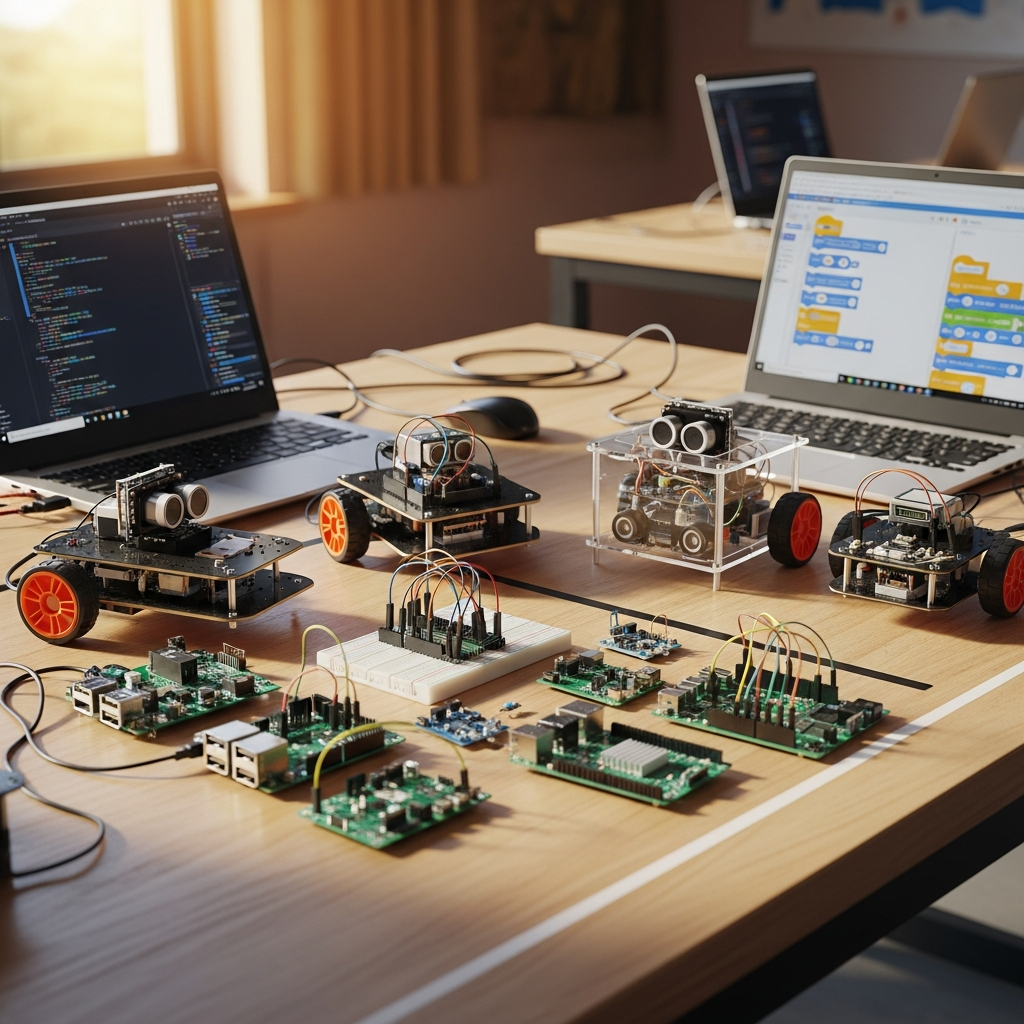
5. Robotics & Engineering Clubs
Robotics clubs are popular but can be pricey due to the cost of kits (LEGO® Education, VEX, micro:bit robots, etc.).
What they usually involve
- Building simple robots or moving models.
- Programming robots to follow lines, avoid obstacles, or complete challenges.
- Sometimes entering competitions (FIRST® LEGO League, VEX IQ, etc.).
What a strong robotics club looks like
- Children are hands‑on with building and coding, not just watching the adult.
- There is time to test, fail, and improve – not rushed one‑off builds.
- Staff encourage team roles (builder, coder, tester, documenter) to build social skills.
- Equipment is well maintained and clearly labelled.
- There is clear behaviour and safety guidance around tools and small parts.
Typical London costs
- £10–£18 per 1–1.5 hour session in schools.
- £18–£30 per session in specialist centres or premium providers.
- Some schools share kits across year groups to keep costs down.
Questions to ask
- “How many children share one robotics kit?” (Ideally 2–3 per kit, max 4.)
- “Do children get to take part in competitions or longer‑term projects?”
- “How do you support children who are less confident with fine motor skills?”
6. Maths Problem‑Solving & Puzzle Clubs
Maths clubs can be brilliant for building confidence, especially for children who think they’re “not good at maths”.
What they usually involve
- Puzzles and games – logic puzzles, strategy games, maths board games.
- Real‑life maths – budgeting, recipes, measuring, planning trips.
- Maths competitions – UKMT challenges, school‑wide contests.
- Collaborative problem‑solving – working in pairs or small groups.
Signs of a high‑quality maths club
- Focus on thinking and reasoning, not just speed or right answers.
- Children are encouraged to explain how they got their answer.
- Staff celebrate different methods, not just one “correct” way.
- Activities are varied – not just worksheets or online drills.
- There is no shaming for mistakes; errors are used as learning points.
Typical London costs
- Often among the cheapest STEM clubs:
- £5–£10 per session in primary schools.
- Sometimes free as part of Pupil Premium or catch‑up funding.
- More structured “maths tuition clubs” may cost £15–£30 per session.
Questions to ask
- “Is this more like tuition or more like enrichment and puzzles?”
- “How do you support children who are anxious about maths?”
- “Do you group by ability, or mix abilities deliberately?”
7. Maker, Tinkering & DIY Engineering Clubs
These clubs focus on building, designing and fixing things – great for practical learners.
Typical activities
- Cardboard engineering – bridges, towers, marble runs.
- Simple electronics – circuits, LEDs, buzzers, basic soldering (older children).
- Upcycling projects – turning waste materials into useful objects.
- 3D printing or laser cutting (in some better‑equipped schools or hubs).
What a good maker club looks like
- Clear safety rules around tools (scissors, craft knives, glue guns, soldering irons).
- Staff demonstrate safe tool use and supervise closely.
- Children are encouraged to design first, not just copy templates.
- There is time to iterate – build, test, improve.
- Materials are organised and accessible, not a chaotic pile.
Typical London costs
- £8–£15 per session in schools or community centres.
- Extra materials fee of £10–£30 per term is common.
- Some boroughs have makerspaces or libraries with free/low‑cost sessions.
Red flags
- Tools left unattended or within easy reach of younger children.
- No clear risk assessment for hot glue, soldering, or sharp tools.
- Children mostly colouring or cutting pre‑printed sheets, not real making.
8. Eco‑Science & Nature Investigation Clubs
These clubs link science with the environment – ideal if your child loves animals, plants or being outdoors.
Typical activities
- School garden projects – planting, composting, measuring growth.
- Bug hunts and biodiversity surveys in the playground or local park.
- Weather recording – temperature, rainfall, wind.
- Eco‑campaigns – recycling drives, energy audits, plastic‑free projects.
What a strong eco‑science club looks like
- Regular outdoor time, even in colder months (with appropriate clothing).
- Clear boundaries and supervision in outdoor spaces.
- Links to local environment – London parks, canals, urban wildlife.
- Children involved in planning and decision‑making (e.g. what to plant).
- Respect for living things – no unnecessary harm to insects or plants.
Typical London costs
- Often £5–£10 per session in primary schools.
- Some clubs are funded by environmental charities and may be free or very low cost.
- Occasional extra cost for trips to nature reserves or city farms.
Questions to ask
- “How do you manage safety when working outdoors or with soil and tools?”
- “Do you run in all weathers, and what should children wear?”
- “How do you include children who are less keen on mud or insects?”
9. Digital Media & Creative Tech Clubs
These clubs blend STEM with creativity – ideal for children who love art, music or storytelling.
Typical activities
- Stop‑motion animation using tablets or laptops.
- Digital music production – simple beat‑making and sound editing.
- 3D design – basic modelling for 3D printing or games.
- Video editing – creating short films or documentaries.
What a good creative tech club looks like
- Clear rules around online safety and content.
- Children create original work, not just copying YouTube tutorials.
- Staff talk about ethical use of media (copyright, consent, privacy).
- There is a balance of tech skills and storytelling/creativity.
- Finished projects are shared in a safe way (e.g. in‑school showcase, not public social media).
Typical London costs
- £10–£18 per session depending on equipment and software.
- May require headphones, USB sticks or specific apps – check for hidden costs.
Red flags
- No clear policy on filming or sharing content.
- Children left to browse the internet unsupervised.
- Heavy reliance on ad‑filled free apps without explanation.
10. Girls‑Focused STEM Confidence Clubs
These clubs aim to tackle gender stereotypes and build confidence for girls in STEM, usually from KS2 upwards.
Typical activities
- Hands‑on STEM projects with a focus on collaboration.
- Role models via stories or videos (women in engineering, medicine, tech).
- Confidence‑building exercises – presenting ideas, leading teams.
- Sometimes linked to mentoring schemes or national programmes.
What a strong girls‑focused club looks like
- Focus on real skills and projects, not just “pinkifying” STEM.
- Staff challenge stereotypes gently but clearly.
- Space for girls to talk about experiences (e.g. feeling talked over in class).
- Opportunities to lead activities and present work.
- Clear inclusion of non‑binary and gender‑questioning children where appropriate and in line with school policy.
Typical London costs
- £6–£15 per session depending on provider and location.
- Some are grant‑funded and free for certain schools or boroughs.
Questions to ask
- “How do you make sure this is about real STEM skills, not just branding?”
- “Do you work with the whole school on gender stereotypes, or only club members?”
11. Library‑Based STEM & Homework Clubs
Many London borough libraries now host STEM‑flavoured homework clubs or coding/robotics sessions.
What they usually offer
- Quiet space for homework with access to books and sometimes computers.
- Volunteer or staff support for reading, maths and science questions.
- Occasional STEM workshops – coding, robotics, science shows.
- Often free or very low cost.
Pros and cons
Pros
- Very affordable or free.
- Good for children who need homework structure.
- Access to books and resources you may not have at home.
- Often more relaxed and informal than school.
Cons
- Staff may not be specialist STEM educators.
- Less structured progression in STEM topics.
- Mixed‑age groups can be challenging for some children.
Typical London costs
- Often free with library membership.
- Some charge a small fee (e.g. £1–£3 per session).
Questions to ask
- “Is this mainly homework support, or are there structured STEM activities?”
- “How many staff or volunteers are on duty, and are they DBS‑checked?”
12. Museum, University & Charity‑Led Outreach Clubs
London is rich in STEM outreach from museums, universities and charities.
Common examples
- After school or weekend clubs linked to science museums or discovery centres.
- University outreach programmes for local schools (e.g. engineering or computing clubs).
- Charity‑run STEM clubs in community centres or youth clubs.
What makes these valuable
- Access to specialist equipment and spaces (labs, maker spaces).
- Staff often include researchers or subject specialists.
- Strong focus on inspiring curiosity and long‑term engagement.
- Often subsidised or free for target groups or boroughs.
Typical London costs
- Range from free to £15 per session, depending on funding.
- Travel costs can be a factor if the venue is across the city.
Questions to ask
- “Is there a long‑term programme, or is it a one‑off series?”
- “How do you handle safeguarding when children are on a university or museum site?”
13. Safeguarding, Ofsted and Legal Basics for STEM Clubs
Whether a STEM club is Ofsted‑registered depends mainly on its hours and purpose.
When Ofsted registration is usually required
A club is likely to need Ofsted registration if it:
- Provides childcare for under‑8s for more than 2 hours a day, and
- Runs regularly (not just occasional workshops), and
- Is not run directly by a school for its own pupils on its own site (these are usually covered under the school’s registration).
Many after school clubs on school premises for that school’s pupils operate under the school’s existing registration and policies.
What you should expect regardless of registration
Even if a club is not Ofsted‑registered, you should still see:
- Clear safeguarding policy – how they keep children safe, and how concerns are reported.
- A named Designated Safeguarding Lead (DSL) or equivalent.
- Enhanced DBS checks for all staff and regular volunteers.
- First aid provision – at least one staff member with paediatric first aid for primary‑age groups.
- Risk assessments for activities, especially for tools, chemicals, or off‑site trips.
- Emergency procedures – fire, lockdown, medical emergencies.
How to check
- Ask: “Are you Ofsted‑registered, or covered under the school’s registration?”
- Ask to see their safeguarding policy and DBS policy.
- For external providers in schools, ask the school office how they vet and monitor them.
14. Staff Qualifications and Ratios: What’s Reasonable?
STEM clubs vary widely in staff backgrounds. Some are run by qualified teachers, others by STEM graduates, technicians or trained facilitators.
Reasonable expectations for staff
For primary‑age STEM clubs, look for at least one lead adult who has:
- Experience working with children of that age (school, youth work, tutoring).
- Subject knowledge appropriate to the activities (e.g. basic coding, safe handling of materials).
- Safeguarding training and awareness of school policies.
- Ability to differentiate – adapt tasks for different abilities.
Formal QTS (Qualified Teacher Status) is a bonus but not essential for all clubs, especially if they’re enrichment rather than tuition.
Staff‑to‑child ratios
There is no single legal ratio for all after school clubs, but as a guide:
- KS1 (5–7 years): Aim for 1:8 or better.
- KS2 (7–11 years): 1:10–12 can be acceptable for low‑risk activities.
- Higher‑risk activities (tools, chemicals, off‑site trips): smaller groups or extra adults.
Ask specifically:
- “What is your maximum group size?”
- “How many adults are usually present?”
- “What happens if a staff member is off sick – do you cancel or bring in cover?”
Red flags around staffing
- Staff seem unsure of behaviour boundaries or inconsistent in enforcing them.
- No clear lead adult – everyone appears temporary or unsure.
- High turnover of staff with no explanation.
- Staff cannot explain how they adapt for different ages or abilities.
15. How STEM Clubs Build Confidence and Social Skills
A good STEM club is not just about content; it should also support social and emotional development.
Confidence‑building signs
- Children are encouraged to share ideas, even if they’re not sure.
- Staff respond to mistakes with curiosity, not criticism.
- There are small leadership opportunities – handing out equipment, explaining a method, helping a peer.
- Children can see their progress over time (e.g. more complex projects, certificates, displays of work).
Social skills development
Look for clubs that:
- Use pair and group work deliberately, not just as a way to manage numbers.
- Teach turn‑taking and listening explicitly, especially in KS1/KS2.
- Encourage peer support – older or more confident children helping others.
- Handle disagreements or competition calmly and fairly.
If your child is shy or anxious, ask:
- “How do you support children who are nervous about joining in?”
- “Is it okay for them to observe at first and join in gradually?”
16. SEND Inclusion and Accessibility in STEM Clubs
London schools have a wide range of children with SEND (Special Educational Needs and Disabilities). A good STEM club should be inclusive by design, not as an afterthought.
What inclusive practice looks like
- Staff ask about additional needs on the registration form.
- Reasonable adjustments are offered – visual supports, quieter spaces, extra time.
- Activities can be adapted – larger components, alternative tools, simplified instructions.
- Clear routines and visual timetables for children who need predictability.
- Willingness to liaise with the SENCO or class teacher.
Physical accessibility
- Check step‑free access to the club room and toilets.
- Ask about seating and table heights if your child uses a wheelchair or specialist seating.
- For outdoor or maker clubs, ask about pathways and surfaces.
Sensory considerations
- Coding and robotics clubs can be noisy and visually busy.
- Ask if there is a quiet space or option to use noise‑reducing headphones.
- Check whether staff are open to sensory breaks.
Questions to ask
- “Have you previously supported children with [autism/ADHD/physical disability/etc.]?”
- “What adjustments can you offer if my child becomes overwhelmed?”
- “Can my child have a trial session to see if it’s a good fit?”
If a provider seems defensive or vague about SEND, consider that a warning sign.
17. Borough Differences: What to Expect Across London
London is not one uniform market. Availability, cost and quality of STEM clubs vary by borough.
Inner vs outer London
-
Inner London (e.g. Camden, Islington, Lambeth, Southwark, Hackney)
- More specialist providers and outreach from universities/museums.
- Higher venue and staffing costs, so clubs may be pricier.
- Better access to public transport for off‑site clubs.
-
Outer London (e.g. Bromley, Enfield, Hillingdon, Croydon, Havering)
- More school‑based clubs run by staff or local providers.
- Often lower prices, but fewer highly specialised options.
- Travel to central venues can be time‑consuming and costly.
Local authority and school priorities
Some boroughs invest more in STEM enrichment through:
- Library services – coding clubs, science events.
- Youth services – STEM in youth clubs.
- Partnerships with universities or charities.
Ask your school office, PTA or local Facebook/WhatsApp parent groups about:
- Which providers are well‑regarded locally.
- Any borough‑funded schemes or discounts (e.g. for low‑income families).
- Transport options if a club is in another part of London.
18. Red Flags: When a STEM Club May Not Be Worth It
Even if a club looks impressive on paper, there are warning signs that it may not be safe, consistent or genuinely educational.
Safety and safeguarding red flags
- Staff do not know who the safeguarding lead is.
- No clear sign‑in/sign‑out process for children.
- Children wandering unsupervised between rooms or outside.
- Hazardous materials or tools left unattended.
- Staff reluctant to show policies or answer safeguarding questions.
Quality and learning red flags
- Sessions are mostly colouring sheets or watching videos.
- Children repeatedly do the same activity each week.
- Staff cannot explain what skills children are developing.
- No adaptation for different ages or abilities.
Consistency and communication red flags
- Frequent last‑minute cancellations.
- Poor communication about changes, trips or expectations.
- No clear refund or credit policy if sessions are cancelled.
- Staff regularly late to start or finish sessions.
If you see multiple red flags, consider withdrawing your child and feeding back to the school, provider and (if serious) the local authority or Ofsted.
19. What to Ask During a Club Visit or Trial Session
Whenever possible, arrange to visit a session or at least meet the lead adult briefly at pick‑up.
Here is a practical checklist of questions.
About safety and safeguarding
- “Who is your Designated Safeguarding Lead, and how would I contact them?”
- “Are all staff and regular volunteers DBS‑checked?”
- “What is your procedure if I’m delayed at pick‑up?”
- “How do you manage allergies and medical needs?”
About learning and activities
- “Can you show me an example of a typical session?”
- “How do activities progress over the term?”
- “How do you support children who are new to STEM or less confident?”
- “How do you stretch more advanced children?”
About staff and group dynamics
- “What is your maximum group size and typical adult‑to‑child ratio?”
- “How do you handle behaviour issues or bullying?”
- “How do you help children who don’t know anyone in the group?”
About practicalities and cost
- “What is the total cost per term, including any materials or registration fees?”
- “What is your refund policy if my child doesn’t settle or we move school?”
- “Do you offer discounts for siblings or low‑income families?”
Take notes after the visit while it’s fresh in your mind.
20. Practical Checklists for Parents
Use these quick checklists when comparing clubs.
Quick safety and quality checklist
- Clear sign‑in/sign‑out process.
- Staff know and can explain safeguarding procedures.
- Room is tidy enough to be safe, but not sterile – evidence of real activity.
- Equipment looks well maintained.
- Children appear engaged and relaxed, not bored or distressed.
- Staff interact warmly and respectfully with children.
- Activities are hands‑on, not just watching or worksheets.
Quick SEND‑friendliness checklist
- Registration form asks about additional needs.
- Staff respond positively and specifically when you mention SEND.
- Willingness to offer reasonable adjustments.
- Clear routines and visual supports where needed.
- Noise and sensory levels are manageable or can be adapted.
Quick value‑for‑money checklist
- Clear breakdown of fees and any extras.
- No surprise registration or materials fees.
- Sessions start and finish on time.
- Evidence of progression – projects get more complex over time.
- Your child wants to go back and talks about what they did.
21. Two Example London STEM Club Journeys (Realistic Scenarios)
To make this more concrete, here are two typical London family scenarios.
Scenario 1: Year 3 child in Waltham Forest
- Parent wants an affordable, local club that builds confidence in science.
- School offers a science explorers club at £7 per session, 10‑week term.
- Run by a Year 4 teacher and a TA, on school site.
Parent checks:
- Safeguarding is covered under school policies.
- Teacher shows a term plan: forces, materials, simple experiments.
- Club has 1:12 ratio, with clear safety rules.
Outcome:
- Child initially anxious about mess, but staff allow them to observe first.
- By week 4, child is leading a small group in a magnet experiment.
- Parent sees improved science confidence in class and homework.
Scenario 2: Year 7 child in Lambeth
- Parent wants a coding club beyond what school offers.
- Finds a community coding club at a local library, free, funded by a charity.
- Run by trained volunteers with enhanced DBS.
Parent checks:
- Library provides safeguarding policy and volunteer training details.
- Group size is 10–12, with 2 adults.
- Activities include Scratch, then Python, with project showcases.
Outcome:
- Child builds a simple game and later a text‑based adventure in Python.
- Gains confidence to choose Computer Science as a GCSE option later.
- Parent pays only for travel and occasional snacks.
22. Where to Start Looking for Affordable STEM Clubs in London
Here are practical starting points:
- Your child’s school – ask about existing clubs and whether they can invite external STEM providers.
- Local libraries – check noticeboards and websites for coding, robotics or homework clubs.
- Borough council website – look under youth services, family information service, or local offer (for SEND).
- Museums and science centres – many run after school or weekend programmes.
- Community centres and churches – often host external providers at lower venue costs.
- Parent networks – WhatsApp groups, PTA, local Facebook groups for honest reviews.
Keep a simple spreadsheet or note on your phone with:
- Club name and type.
- Location and travel time.
- Cost per session and per term.
- Age range and group size.
- Your notes on safety, staff, and your child’s reaction.
23. Final Thoughts: Choosing a Club That Truly Inspires a Love of Science
A STEM club doesn’t need to be expensive, flashy or full of cutting‑edge kit to be effective. The most inspiring clubs usually share a few simple qualities:
- Children are actively involved – building, testing, questioning.
- Staff are warm, curious and organised, with clear boundaries.
- Safety and safeguarding are visible priorities, not afterthoughts.
- Activities grow in complexity over time, so children feel real progress.
- Your child comes home talking about what they did, not just what they were told.
Use the checklists and questions in this guide to compare options calmly. Trust your instincts about how staff interact with children, and remember that it’s fine to try a club for a term and then adjust if it’s not the right fit.
The goal is not to turn your child into a future engineer overnight, but to nurture curiosity, confidence and enjoyment of how the world works. With thoughtful choices, an affordable STEM club in London can do exactly that.