10 After-School Art Clubs in London That Actually Nurture Your Child’s Creativity (Not Just Colouring In)
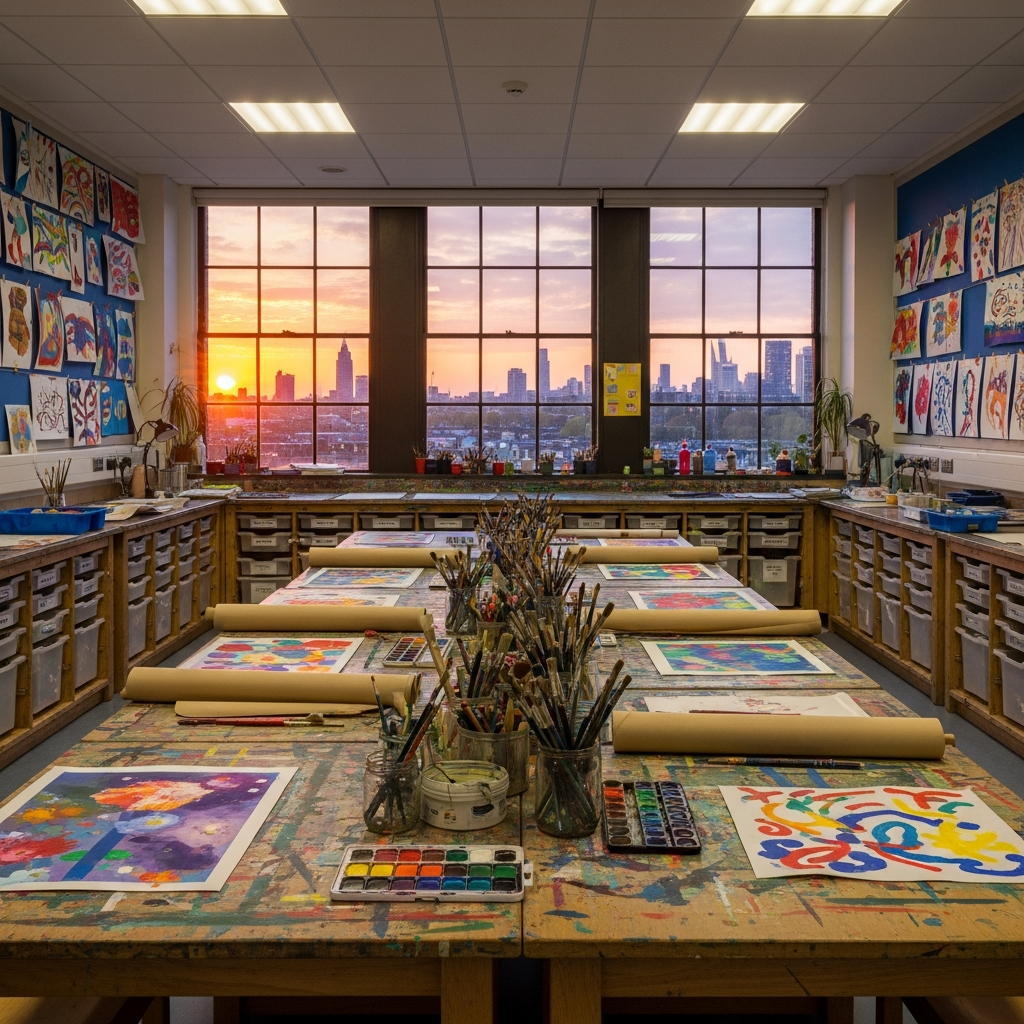
10 After-School Art Clubs in London That Actually Nurture Your Child’s Creativity (Not Just Colouring In)
London is full of after-school art clubs – from tiny church-hall sessions to glossy studios in converted warehouses. Some are brilliant, genuinely nurturing children’s creativity. Others are little more than glorified colouring-in with felt tips that ran out last term.
This guide is for parents who want more than “keep them busy until pick-up”. You want:
- Real creative development, not just worksheets
- Safe, well-run provision that understands safeguarding and Ofsted
- Staff who know how to work with children, not just talented artists
- Good value for money, with no nasty hidden costs
- Inclusive environments where shy children, neurodivergent children and those with SEND can thrive
Below you’ll find:
- 10 types of London after-school art clubs that can genuinely nurture creativity (with real London examples and what to look for)
- How to judge quality, safety and staff qualifications
- Typical London costs and hidden fees to watch for
- Borough-specific considerations (e.g. Camden vs Croydon vs Newham)
- Red flags that a club is more about crowd control than creativity
- Practical checklists and exact questions to ask when you visit
This is written from a UK perspective, with Ofsted and safeguarding in mind, and is relevant whether your child is in Key Stage 1 or Key Stage 3.

1. What a High-Quality After-School Art Club in London Should Actually Offer
Before looking at specific types of clubs, it helps to be clear on what “good” looks like. A high-quality art club that truly nurtures creativity in London should offer:
1.1 Creative depth, not just busywork
Look for clubs that:
- Use open-ended projects (e.g. “create a creature from recycled materials”) rather than identical step-by-step copies of the tutor’s example.
- Introduce a range of media: drawing, painting, collage, clay, printmaking, textiles, maybe even digital art.
- Encourage experimentation and mistakes – not perfection.
- Talk about ideas, feelings and stories behind the artwork, not just “colour in neatly”.
Ask yourself: Would my child come home with something that reflects their personality, or something that looks exactly like 20 other children’s work?
1.2 Emotional safety and confidence-building
Art is personal. A nurturing club will:
- Use positive, specific feedback (e.g. “I love how you used those bold colours”) rather than “That’s wrong, do it like this”.
- Avoid public shaming or comparing children’s work.
- Support shy or anxious children to share their work at their own pace.
- Celebrate effort and risk-taking, not just “talent”.
1.3 Strong safeguarding and organisation
In London, any regular after-school club should have:
- A named Designated Safeguarding Lead (DSL), trained and clearly identified.
- Enhanced DBS checks for all staff and regular volunteers.
- Clear arrival and collection procedures (who can collect, late collection policy, password system).
- A register taken at the start and end of each session.
- Up-to-date policies: safeguarding, behaviour, health and safety, data protection.
If the club is run on school premises, some safeguarding responsibility sits with the school, but the provider should still have its own policies and training.
1.4 Developmentally appropriate teaching
Good art clubs understand child development:
- KS1 (5–7): shorter activities, lots of sensory exploration, big movements, stories linked to art.
- KS2 (7–11): more technique, longer projects, introduction to artists and styles.
- KS3 (11–14): more independence, sketchbooks, experimentation, critique skills.
If a club uses the same activity for Reception and Year 6, that’s a concern.
2. 10 Types of London Art Clubs That Can Truly Nurture Creativity
Rather than listing specific brands (which change constantly), this guide focuses on 10 types of art clubs you’ll actually find across London – and how to tell the good from the not-so-good.
2.1 School-Based Art Enrichment Clubs
These are clubs run on school premises, either by school staff or external providers.
Why they can be excellent:
- Children are in a familiar environment.
- Staff may already know your child’s needs, triggers and strengths.
- Easy logistics – no extra travel.
- Often cheaper than private studios.
What to look for:
- Is it led by a specialist art teacher or a TA with a genuine interest and some training?
- Do they use proper art materials (acrylics, watercolours, pastels, clay) or just felt tips and photocopies?
- Are projects linked to artists, cultures or themes beyond the national curriculum?
Questions to ask the school:
- “Is the club mainly free drawing/colouring, or do children learn new techniques?”
- “Who plans the sessions – a qualified teacher, or an external provider?”
- “How do you support children who are anxious about ‘getting it wrong’?”
2.2 Community Arts Centres and Studios
London has many community arts centres (e.g. in Hackney, Camden, Southwark) offering after-school sessions.
Strengths:
- Access to specialist equipment (printing presses, kilns, large canvases).
- Tutors often practising artists with strong technical skills.
- Mixed groups from different schools – great for social skills.
Watch out for:
- Some studios focus heavily on product over process – children copying a “perfect” example.
- Not all practising artists are good with children; look for experience in education.
Ask:
- “What proportion of the session is demonstration vs children exploring?”
- “Do children work on individual projects or all follow the same design?”
- “How do you differentiate for a 7-year-old vs an 11-year-old?”
2.3 Museum and Gallery-Based Clubs
Major London institutions (Tate, V&A, National Gallery, local museums) often run after-school or weekend art clubs.
Why they can be powerful:
- Direct engagement with real artworks and artefacts.
- Exposure to a wide range of cultures and art histories.
- Often led by experienced arts educators.
Limitations:
- May be termly or monthly rather than weekly.
- Travel across London after school can be tiring for younger children.
Look for:
- Clubs that combine looking, discussing and making.
- Opportunities for children to interpret art in their own way, not just copy.
2.4 Specialist Drawing and Illustration Clubs
These focus on drawing skills, comics, manga, graphic novels or illustration.
Great for:
- Children who love characters, stories and detail.
- Older primary and early secondary pupils.
Signs of quality:
- Teaching of fundamentals: proportion, perspective, shading, composition.
- Encouragement of original characters and stories, not just copying existing ones.
- Discussion of visual storytelling – panels, pacing, emotion.
Red flag: endless worksheets of “how to draw an eye” with no creative application.
2.5 Clay, Ceramics and 3D Art Clubs
Found in some studios and community centres, especially in boroughs like Camden, Islington, Lambeth and Haringey.
Benefits:
- Fantastic for sensory regulation and fine motor skills.
- Builds patience and planning (waiting for pieces to dry or be fired).
Check:
- How they manage safety (tools, glazes, kilns).
- Whether children can design their own pieces, not just follow templates.
2.6 Digital Art and Animation Clubs
Growing fast in London, often linked to STEM hubs or creative tech spaces.
Can nurture:
- Creativity plus digital literacy.
- Storytelling, design thinking and problem-solving.
Quality indicators:
- Use of age-appropriate software (e.g. Tayasui Sketches, Procreate, simple animation tools).
- Balance between screen time and sketchbook work.
- Clear e-safety policies and no unsupervised internet access.
2.7 Street Art, Mural and Urban Art Clubs
More common in inner London boroughs (e.g. Tower Hamlets, Hackney, Southwark) often run by youth arts charities.
Strengths:
- Connects art to local community and public spaces.
- Can be very engaging for children who don’t enjoy “traditional” art.
Check carefully:
- Safeguarding and supervision if working outdoors.
- Clear boundaries about legal vs illegal graffiti.
2.8 Faith or Culturally-Based Art Clubs
Some churches, mosques, temples and cultural centres run art clubs with a cultural or faith element.
Can offer:
- Strong sense of belonging and identity.
- Exposure to traditional crafts (e.g. calligraphy, textile arts, pattern work).
Ask:
- “How do you balance teaching specific traditions with children’s own creative choices?”
- “Are children from other backgrounds welcome and included?”
2.9 SEND-Specialist or Neurodiversity-Aware Art Clubs
Some London providers specialise in working with autistic children, children with ADHD, learning differences or social communication needs.
Look for:
- Staff with SEND training and experience.
- Smaller group sizes and sensory-aware environments.
- Visual timetables, clear routines, and options for quiet spaces.
2.10 Private Home-Based or Micro-Studios
Individual artists or teachers running small clubs from home studios or hired rooms.
Can be excellent if:
- They have strong safeguarding procedures despite being small.
- Group sizes are genuinely small (4–8 children) with individual attention.
But:
- These are not usually Ofsted-registered, so you can’t use childcare vouchers or claim Tax-Free Childcare.
- You must be extra vigilant about safety, insurance and DBS checks.
3. Ofsted, Registration and Safeguarding: What London Parents Need to Know
3.1 When should an art club be Ofsted-registered?
In England, an after-school art club may need to register with Ofsted if it:
- Runs for more than 2 hours a day, and
- Runs for more than 14 days a year, and
- Cares for children under 8 without a parent present.
However, there are exemptions, especially for activity-based clubs (like sports or arts) that focus on a single activity and don’t provide general childcare.
Key point:
- Lack of Ofsted registration does not automatically mean poor quality, but it does mean you need to ask more questions.
3.2 What Ofsted registration gives you
If a club is Ofsted-registered, you can:
- Check its Ofsted report online.
- Use Tax-Free Childcare or childcare vouchers (if your employer still offers them).
- Expect compliance with the EYFS framework for under-5s.
3.3 Safeguarding essentials (Ofsted-aware)
Whether registered or not, a responsible London art club should:
- Have a written safeguarding policy aligned with local authority guidance.
- Name a Designated Safeguarding Lead (DSL) with up-to-date training.
- Ensure enhanced DBS checks for all staff and regular volunteers.
- Train staff in recognising and reporting concerns.
- Have clear ratios (e.g. 1:8 or better for primary-aged children).
Ask directly:
- “Who is your Designated Safeguarding Lead?”
- “When were they last trained?”
- “Do all staff have enhanced DBS checks?”
If they hesitate or seem offended, that’s a red flag.
4. Staff Qualifications: What’s Realistic to Expect in London Art Clubs
4.1 Ideal staff profile
A strong London art club will typically have a mix of:
- At least one lead tutor with:
- A degree or formal training in art, design or art education, or
- Qualified Teacher Status (QTS) with art specialism, or
- Significant experience teaching art to children.
- Assistants with:
- Experience working with children (schools, youth work, childcare).
- Basic safeguarding and first aid training.
4.2 What matters more than formal qualifications
In practice, look for:
- Evidence they can explain techniques clearly at different levels.
- Ability to manage behaviour calmly and positively.
- Understanding of child development (e.g. not expecting 6-year-olds to sit still for 90 minutes).
- Willingness to adapt for SEND and different learning styles.
4.3 Questions to ask about staff
- “What is the main tutor’s background – art, teaching, both?”
- “Have staff worked in schools or youth settings before?”
- “Do you receive regular safeguarding and first aid training?”
- “What is your usual adult-to-child ratio?”
5. London Costs: What’s Reasonable for After-School Art Clubs?
Costs vary widely across London, depending on borough, venue and staffing.
5.1 Typical price ranges (as of 2024/25)
For a 60–90 minute after-school art club:
- School-based clubs (outer London): £6–£10 per session
- School-based clubs (inner London): £8–£14 per session
- Community arts centres: £10–£18 per session
- Private studios / specialist clubs: £15–£30 per session
Holiday art camps can be more: often £40–£80 per day depending on location and hours.
5.2 Hidden costs to watch for
- Materials fees: Some clubs charge an extra £10–£30 per term for materials.
- Exhibition fees: Occasional small charges for end-of-term shows or framing.
- Late collection fees: Common in London; check the rate (e.g. £5–£10 per 10–15 minutes).
- Trial sessions: Some offer free trials; others charge a one-off registration fee.
5.3 Value vs price
A cheaper club isn’t always better value. Consider:
- Quality and variety of materials (proper paints, decent paper, 3D materials).
- Group size and individual attention.
- Staff expertise and safeguarding standards.
- Evidence of progress (skills, confidence, independence).
Ask yourself: Would I rather pay £8 a week for colouring sheets, or £15 a week for real creative development and strong safeguarding?
6. Borough-by-Borough Considerations Across London
London is not one uniform market. Provision and costs vary by borough.
6.1 Inner London (e.g. Camden, Islington, Hackney, Southwark, Lambeth)
- More choice of specialist studios and community arts centres.
- Higher likelihood of museum/gallery-linked programmes.
- Prices often at the upper end of the ranges.
- Waiting lists can be long; book early.
6.2 Outer London (e.g. Bromley, Croydon, Enfield, Hillingdon, Sutton)
- Fewer specialist studios, more school-based clubs and church-hall style sessions.
- Prices often lower, but travel can be a factor if you choose a club outside your immediate area.
6.3 Gentrifying or mixed areas (e.g. Waltham Forest, Lewisham, Haringey)
- Growing number of creative hubs and studios.
- Mix of community-funded and private provision.
- Some clubs offer sliding scale fees or bursaries.
6.4 Practical borough questions
- “Is this club easy to reach in rush hour traffic or on public transport?”
- “Is the area well-lit and safe at pick-up time in winter?”
- “Does the club understand local families’ needs (e.g. working hours, cultural expectations)?”
7. How Art Clubs Build Confidence, Resilience and Social Skills
A good art club is about far more than drawing skills.
7.1 Confidence and self-esteem
High-quality clubs:
- Encourage children to take creative risks without fear of “getting it wrong”.
- Celebrate individual style rather than pushing one “right” way.
- Offer chances to share work in low-pressure ways (e.g. table displays, small group discussions).
You should see your child gradually:
- Talking more positively about their ideas.
- Being less afraid to try new things.
- Taking pride in their sketchbooks or portfolios.
7.2 Resilience and perseverance
Art naturally teaches:
- Trial and error – if something doesn’t work, you can layer, collage, repaint.
- Longer-term projects – murals, clay pieces, multi-session paintings.
- Problem-solving – “How can I make this stand up?”, “How do I mix this colour?”
7.3 Social skills and collaboration
Look for clubs that:
- Include paired or group projects (e.g. joint murals, collaborative sculptures).
- Encourage children to give kind, constructive feedback.
- Mix ages thoughtfully – older children can mentor younger ones.
If your child is shy, ask:
- “How do you support quieter children to join in without forcing them?”
8. SEND Inclusion and Accessibility in London Art Clubs
8.1 What inclusive practice looks like
An inclusive art club will:
- Ask about your child’s needs on the registration form.
- Offer a pre-visit or phone call to discuss strategies.
- Use visual timetables and clear routines.
- Provide sensory options (e.g. quieter corner, noise-reducing headphones allowed, different textures).
- Be flexible about sitting vs standing, movement breaks and fidget items.
8.2 Questions to ask if your child has SEND
- “Have you worked with children with [autism/ADHD/dyslexia/anxiety] before?”
- “What adjustments can you make if my child finds noise/crowds/demands difficult?”
- “Can my child have a familiar adult stay for the first session or two?”
- “How do you handle meltdowns or shutdowns?”
8.3 Physical accessibility
Especially in older London buildings, check:
- Step-free access from street to studio.
- Accessible toilets.
- Space for mobility aids.
If the venue is in a basement or upper floor with no lift, that may be a barrier.
9. Red Flags: Signs an Art Club Is More About Containment Than Creativity
When you visit or trial a club, watch for these warning signs.
9.1 Creative red flags
- Every child’s work looks identical to the tutor’s example.
- Children spend most of the time colouring printed sheets.
- Very limited materials – only cheap felt tips and A4 printer paper.
- No chance to choose colours, subjects or composition.
9.2 Behaviour and emotional climate red flags
- Staff use shouting, sarcasm or humiliation to control behaviour.
- Children are told their work is “wrong” or “messy” in a negative way.
- No clear routines; children seem confused or anxious.
9.3 Safeguarding and organisation red flags
- No visible register being taken.
- Unclear who is in charge; staff not wearing badges or lanyards.
- No secure system for collection – children wandering out to find parents.
- Staff unable or unwilling to explain their safeguarding policy.
9.4 Practical red flags
- Overcrowded room with too many children per adult.
- Trip hazards, open storage of sharp tools or chemicals.
- No first aid kit visible; staff unsure who the first aider is.
If you see several of these, trust your instincts and look elsewhere.
10. What to Ask on a Visit: A Parent’s Question List
When you visit or call a London art club, use these questions to get beyond the glossy flyers.
10.1 About creativity and curriculum
- “Can you describe a typical session?”
- “How do you balance teaching techniques with children’s own ideas?”
- “Do children work on longer projects over several weeks?”
- “How do you support children who say ‘I’m not good at art’?”
10.2 About staff and safety
- “Who will be leading the sessions, and what is their background?”
- “What is your usual adult-to-child ratio?”
- “Do all staff have enhanced DBS checks?”
- “Who is your Designated Safeguarding Lead?”
- “Is there a trained first aider on site every session?”
10.3 About SEND and individual needs
- “How do you adapt activities for different ages and abilities?”
- “What information would you like from me about my child?”
- “Can my child have a gradual start if they’re anxious?”
10.4 About logistics and costs
- “What is the total cost per term, including any materials or registration fees?”
- “What is your policy on missed sessions?”
- “What happens if I’m running late for pick-up?”
- “Do you accept Tax-Free Childcare or childcare vouchers?” (if Ofsted-registered)
Write answers down or ask for them in an email so you can compare clubs later.
11. Practical Checklists for London Parents
11.1 Quick pre-booking checklist
Before you commit, can you tick most of these?
- I understand who runs the club (school, private studio, charity, individual).
- I know the exact location and have checked travel time at rush hour.
- I’ve seen or been told about the safeguarding policy.
- I know who the Designated Safeguarding Lead is.
- I know the adult-to-child ratio.
- I’ve seen examples of children’s work that look varied and individual.
- I know the total cost, including materials and any registration fees.
- I’ve asked about SEND support if relevant.
11.2 First-session observation checklist
After your child’s first session, reflect on:
- Did my child seem welcomed and noticed when they arrived?
- Was there a clear structure to the session?
- Did staff speak to children respectfully and calmly?
- Did my child have some choice in what or how they created?
- Did they come home with something that felt personal, not just a copied example?
- Did they talk about the process (“I tried this, then that”) not just “We had to do this”?
- Did staff share any positive feedback or observations about my child?
If several boxes remain unticked after a few weeks, consider discussing concerns with the provider or exploring alternatives.
12. How to Support Your Child’s Art Club Experience at Home
A good club plus a supportive home environment is a powerful combination.
12.1 Talk about the process, not just the product
Instead of “What did you make?”, try:
- “What did you enjoy most about today’s session?”
- “Did you try any new materials or techniques?”
- “Was there anything that didn’t go to plan – how did you handle it?”
12.2 Create a low-pressure art space at home
You don’t need a studio – just:
- A box with basic materials: paper, pencils, crayons, glue, scissors, scrap cardboard.
- A wipeable tablecloth or old sheet.
- Somewhere to display or store work (string with pegs, a folder, a box).
Avoid correcting or “fixing” their work. Let home be a place for free exploration.
12.3 Manage expectations
If your child is tired after school, they may not always be enthusiastic. That doesn’t mean the club is wrong for them. Look at the overall pattern over several weeks.
If they consistently dread going, talk to them and the provider to see what’s going on.
13. Example London Scenarios: What Good and Poor Clubs Look Like
13.1 Scenario A: The Camden Studio That Gets It Right
- Small studio near a Tube station.
- Lead tutor: former secondary art teacher with QTS.
- Group size: 10 children, 2 adults.
- Children work on a four-week project designing and making their own board games, including boards, pieces and box art.
- Tutor introduces examples of graphic design and illustration, then supports each child’s ideas.
- Safeguarding: clear sign-in/out, DBS checks, first aider, visible policies.
Outcome: Children develop drawing, design, planning and collaboration skills. Parents see growing confidence and independence.
13.2 Scenario B: The Church Hall Club in Croydon That’s Just Childcare
- Run by a general childcare provider; art is one of many activities.
- 25 children, 2 staff.
- Activity: photocopied colouring sheets and broken felt tips.
- No teaching of techniques, no choice of subject.
- Staff shout across the room; no clear structure.
- Collection is chaotic; children run out to find parents.
Outcome: Children may be supervised, but creativity and emotional safety are limited. Parents might decide it’s fine as basic childcare, but not as a creative outlet.
13.3 Scenario C: The Hackney Digital Art Club With Mixed Practice
- Run in a co-working space.
- Great equipment: tablets, drawing software, large screens.
- Tutor is a professional designer but has little experience with children.
- Sessions are heavily demonstration-based; children copy the tutor’s design.
- Some children are left behind; little differentiation.
Outcome: Technically impressive but not fully child-centred. With feedback, the provider could improve by adding more open-ended tasks and child choice.
14. Matching the Right Type of Art Club to Your Child
14.1 For the anxious or perfectionist child
Look for:
- Clubs that emphasise process over product.
- Tutors who talk about mistakes as part of learning.
- Smaller groups and calm environments.
Avoid:
- Highly competitive or exam-focused environments.
- Clubs where everyone’s work must look the same.
14.2 For the very active child
Look for:
- Clubs with 3D work, large-scale painting, murals or outdoor elements.
- Opportunities to move around rather than sit still for 90 minutes.
14.3 For the child who “hates art” but loves stories or building
Consider:
- Comics/graphic novel clubs.
- Model-making, sculpture or set design clubs.
- Clubs that combine art with storytelling or drama.
14.4 For the highly able or art-obsessed child
Look for:
- Clubs that introduce art history, contemporary artists and critical thinking.
- Opportunities for portfolio-building (especially in KS3).
- Tutors who can stretch them without pressuring.
15. How to Review and Switch Clubs if Needed
15.1 Reviewing progress each term
Ask yourself and your child:
- “What have you learned this term?”
- “Do you feel more confident trying new things?”
- “Do you feel safe and listened to there?”
Look at their work over time – is there variety and development?
15.2 Talking to the provider
If you have concerns:
- Arrange a calm conversation after a session or via email.
- Be specific: “I’ve noticed my child mainly brings home colouring sheets. Are there opportunities for more open-ended work?”
- See how they respond – open and reflective, or defensive?
15.3 Switching clubs
If things don’t improve:
- Explain to your child in simple terms: “We’re going to try a different art club that might suit you better.”
- Give notice according to the club’s policy.
- Use your checklists and questions to choose a better fit next time.
16. Example: 10 Realistic Types of London Art Clubs You Might Shortlist
To make this concrete, here’s how a London parent might build a shortlist of 10 clubs across different types (names are generic, but the types are real):
- School Art Enrichment Club (Barnet Primary) – run by the school’s art lead, weekly after school.
- North London Community Arts Centre – mixed-age drawing and painting club in a community hub.
- Southbank Gallery Young Creators – monthly after-school sessions linked to current exhibitions.
- East London Comics & Illustration Club – focused on graphic novels and character design.
- West London Clay & Sculpture Studio – small-group ceramics for KS2.
- Digital Creators Lab (City Fringe) – digital painting and simple animation.
- Urban Mural Project (Southwark Youth Arts Charity) – termly mural projects on community walls.
- Cultural Heritage Arts Club (Harrow Community Centre) – traditional crafts and contemporary art inspired by different cultures.
- Neurodiversity-Friendly Art Space (Enfield) – sensory-aware sessions with SEND-trained staff.
- Home Studio Micro-Club (Walthamstow) – small group with a local artist-educator.
A parent might visit or call 3–4 of these, use the questions in this guide, and then choose 1–2 that best fit their child’s needs and logistics.
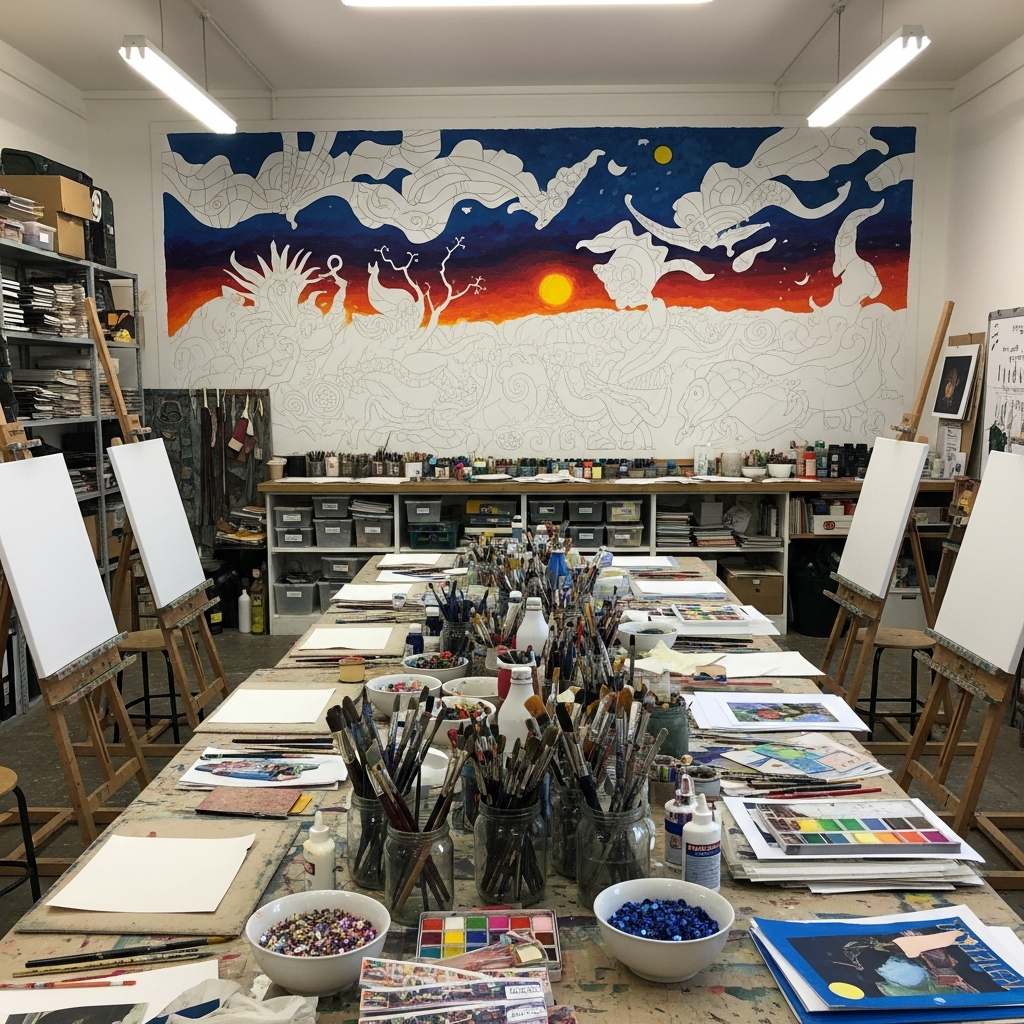
17. Final Thoughts: Choosing Art Clubs That Truly Nurture Your Child
A genuinely nurturing after-school art club in London will:
- Treat your child as an individual artist, not just another seat to fill.
- Balance teaching skills with space for their own ideas.
- Provide a safe, well-organised environment with strong safeguarding.
- Welcome questions about staff, policies, SEND and costs.
You don’t need to be an art expert to judge quality. Use what you now know:
- Look at the work on the walls – is it varied and personal?
- Listen to how staff talk to children.
- Ask direct questions about safeguarding, staff background and creative approach.
- Pay attention to how your child feels before and after sessions.
If a club doesn’t feel right, you’re not being fussy – you’re being a responsible parent. London has a wide range of options; with a bit of research and the checklists in this guide, you can find an after-school art club that truly nurtures your child’s creativity, confidence and joy in making things – not just their ability to stay inside the lines.