Non-Competitive Sports Clubs for Shy Kids in the UK: After School Options That Build Confidence
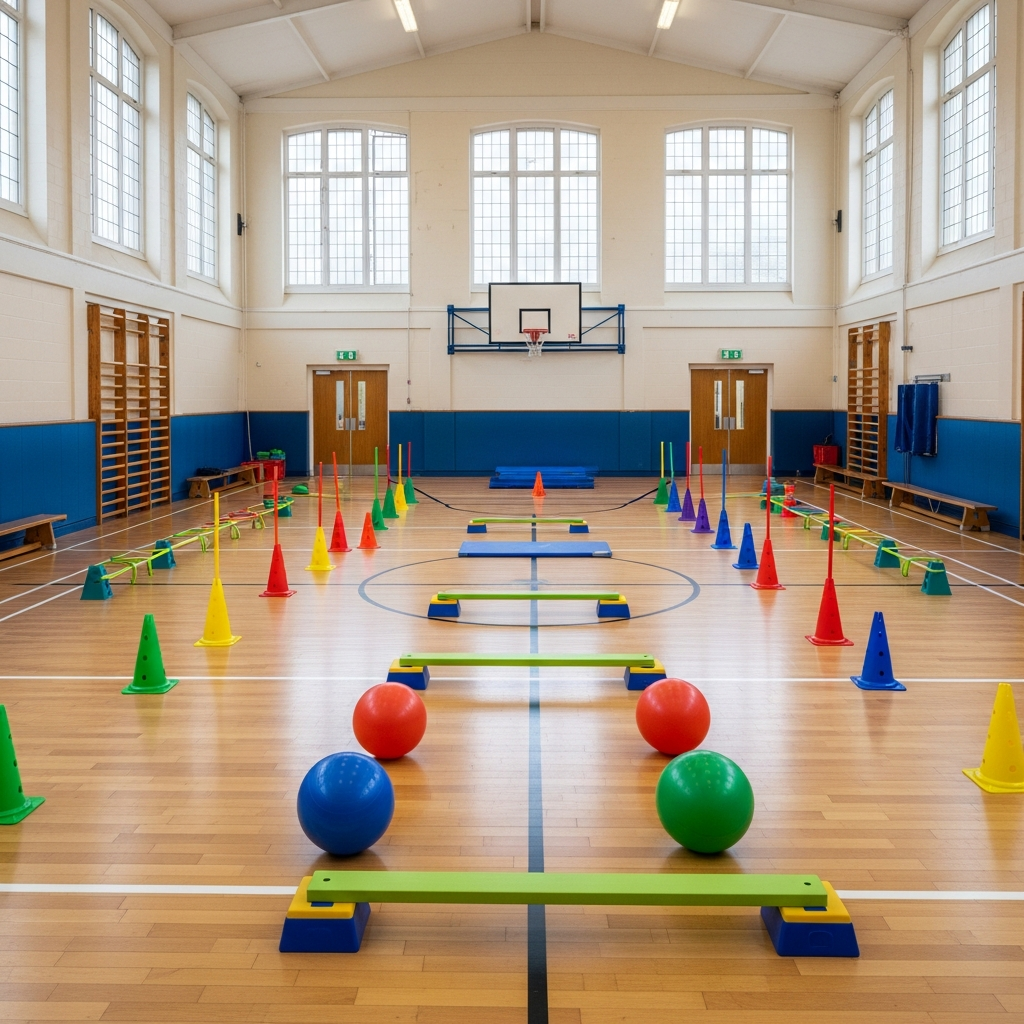
Non-Competitive Sports Clubs for Shy Kids in the UK: After School Options That Build Confidence
Many shy children love moving their bodies but feel overwhelmed by noisy teams, league tables and the pressure to win. Non-competitive sports clubs can be a powerful way to build confidence, friendships and physical literacy without the stress of constant comparison.
This guide is written specifically for UK parents who want:
- Safe, well-run after-school sports options
- A gentle, non-pressured environment for shy or anxious children
- Clear information on staff qualifications and safeguarding
- Realistic cost expectations and how to spot hidden fees
- Practical questions to ask providers before you commit
Whether you live in a busy London borough, a Scottish town, a Welsh village or rural Northern Ireland, the principles are the same: you want a club that is safe, kind, developmentally appropriate and genuinely non-competitive.
1. Why Non-Competitive Sports Can Be Ideal for Shy Children
1.1 Understanding shyness vs anxiety
Shy children are not necessarily anxious or socially avoidant. Many are simply:
- Slow to warm up in new situations
- More comfortable in small groups
- Sensitive to noise and chaos
- Worried about “getting it wrong” in front of others
Traditional competitive sport can amplify these worries:
- Being picked last for teams
- Public scoring and league tables
- Shouting from sidelines
- Fear of letting others down
Non-competitive sports clubs reduce these pressures by focusing on:
- Personal progress rather than winning
- Cooperative games instead of matches
- Skills practice in small groups
- Encouragement over criticism
1.2 Benefits for confidence and wellbeing
Research in child development and physical literacy shows that gentle, positive sports experiences can:
- Improve self-esteem and body confidence
- Reduce social anxiety over time
- Support better sleep and mood regulation
- Build resilience through manageable challenges
- Strengthen motor skills and coordination
For shy children, the key is psychological safety: feeling safe to try, make mistakes and learn without ridicule or pressure.
2. What Counts as a “Non-Competitive” Sports Club?
2.1 Core features
A genuinely non-competitive club typically:
- Does not enter leagues or tournaments as a main focus
- Uses no or minimal scoring in sessions
- Emphasises personal bests and skill development
- Uses cooperative games (e.g. team challenges where everyone wins together)
- Avoids public ranking, “player of the match” style awards every week
- Frames feedback around effort, not ability ("You worked really hard on that skill" rather than "You’re the best")
2.2 Examples of non-competitive formats
Across the UK, you might see:
- Multi-sports skills clubs that rotate activities (throwing, catching, balance, agility) without formal matches
- Movement and games clubs in primary schools that use playground games, obstacle courses and relay-style challenges
- Martial arts with a non-sparring focus, emphasising forms, discipline and self-control rather than fighting
- Yoga, dance or movement classes that focus on expression and body awareness rather than performance
- Outdoor adventure clubs (forest school style, low-level climbing, orienteering) where the goal is exploration, not competition
2.3 Beware of “non-competitive” in name only
Some providers market themselves as “non-competitive” but still:
- Run regular matches with winners and losers
- Publicly rank children’s performance
- Put pressure on children to attend extra training
When you visit (see Section 10), ask very specific questions about how they handle scoring, matches and awards.
3. Types of Non-Competitive Sports Clubs in the UK
Below are common options you’ll find in UK schools, leisure centres and community venues.
3.1 Multi-skills and fundamental movement clubs
Often run in primary schools or leisure centres, these focus on:
- Balance, coordination, agility
- Throwing, catching, jumping, running
- Fun circuits and obstacle courses
Why they suit shy kids:
- Activities are short and varied – less time to dwell on mistakes
- Children can work in pairs or small groups
- Focus is on trying new things, not being the fastest or strongest
3.2 Non-competitive football and ball skills
Some UK providers offer skills-only football or “ball mastery” sessions:
- Dribbling, passing, control, shooting at targets
- Small-sided games with no formal scoring
- Emphasis on technique and enjoyment
Ask explicitly whether they:
- Enter leagues or tournaments
- Keep score in games
- Have a “first team” or “A team” – a sign of competitive focus
3.3 Dance, movement and creative physical clubs
These might include:
- Creative dance
- Street dance foundations
- Movement and rhythm
- Cheer or pom dance without competitions
Benefits for shy children:
- Expression without needing to speak
- Repetition of routines builds confidence
- Often held indoors in smaller, contained spaces
If performances are involved (e.g. end-of-term show), ask how optional they are and how children are supported if they don’t want to perform.
3.4 Yoga, mindfulness and stretching clubs
Children’s yoga and movement clubs are increasingly common in UK schools and studios. They typically include:
- Simple poses and stretches
- Breathing exercises
- Relaxation and mindfulness
These can be particularly helpful for shy children who also experience anxiety, as they:
- Teach self-regulation skills
- Emphasise listening to your body
- Are usually quiet, calm environments
3.5 Martial arts with a gentle ethos
Not all martial arts are competitive. Some UK clubs:
- Focus on forms, discipline and respect
- Delay or avoid sparring
- Offer grading as an optional, low-pressure element
When visiting, ask:
- How soon sparring is introduced (if at all)
- Whether gradings are compulsory
- How they handle children who are nervous about contact
3.6 Outdoor and adventure-based clubs
Examples include:
- Forest school style after-school clubs
- Low-level climbing or bouldering sessions
- Orienteering and navigation games
- Cycling skills in traffic-free areas
These can be excellent for shy children who feel more comfortable outdoors than in noisy sports halls.
4. How Non-Competitive Sports Build Confidence and Social Skills
4.1 The confidence ladder
For shy children, confidence usually builds in small steps:
- Feeling physically safe – no rough play, clear rules
- Feeling emotionally safe – no teasing, gentle coaching
- Trying simple tasks – success with easy wins
- Accepting small challenges – slightly harder skills
- Taking small social risks – speaking up, partnering with new peers
A good non-competitive club structures sessions to support this ladder:
- Warm-ups that everyone can do
- Activities with multiple ways to succeed
- Coaches who notice and praise effort
- Opportunities to help others (e.g. setting up cones, demonstrating a skill when ready)
4.2 Social skills in a low-pressure setting
Non-competitive clubs can help shy children practise:
- Taking turns
- Sharing equipment
- Listening to instructions
- Encouraging peers
- Negotiating rules in games
Because there is less focus on winning, there is more space for:
- Cooperative problem-solving
- Group challenges (e.g. “Can we all get the balls into the hoops in 30 seconds?”)
- Mixed-ability groups where everyone contributes
4.3 Emotional regulation and resilience
Shy children often feel emotions intensely. A well-run club helps them learn to:
- Cope with frustration when a skill is hard
- Try again after a mistake
- Manage disappointment if something doesn’t go to plan
Look for coaches who:
- Normalise mistakes (“Everyone falls off the balance beam sometimes.”)
- Model calm responses
- Offer specific strategies (“Let’s break that skill into two smaller steps.”)
5. Safeguarding and Ofsted: What UK Parents Need to Know
5.1 When does Ofsted regulate sports clubs?
In England, Ofsted may regulate an after-school sports club if it:
- Looks after children under 8 for more than 2 hours a day, or
- Runs for more than 14 days a year, and
- Is not run directly by a school as part of the normal school day
However, many sports clubs operate in a grey area. Some are:
- Registered with Ofsted as out-of-school care
- Registered with another body (e.g. a national sports governing body)
- Not required to register but still follow safeguarding best practice
In Scotland, Wales and Northern Ireland, different regulators apply (e.g. Care Inspectorate in Scotland, CIW in Wales, RQIA in Northern Ireland). Ask the provider which regulatory framework they fall under.
5.2 Safeguarding basics every club should follow
Regardless of registration, every UK sports club working with children should have:
- A named Designated Safeguarding Lead (DSL)
- A written safeguarding and child protection policy
- A safer recruitment process, including:
- Enhanced DBS (or PVG / AccessNI) checks for staff and regular volunteers
- References taken up and recorded
- Clear procedures for reporting concerns
- A code of conduct for staff and participants
Ask to see their safeguarding policy or at least a summary. A reputable provider will not be offended.
5.3 Ratios and supervision
While exact ratios vary by age and activity, as a rule of thumb for after-school sports:
- Ages 4–5 (Reception): around 1 adult to 8 children (or better)
- Ages 6–8: around 1 adult to 10–12 children
- Ages 9–11: around 1 adult to 12–15 children, depending on risk level
Higher-risk activities (climbing, water-based, cycling near roads) should have tighter ratios.
Check:
- Are children always within sight of an adult?
- How do they manage toilet trips (especially off-site or in shared venues)?
- Are there clear boundaries about where children can and cannot go?
5.4 Health and safety essentials
Ask about:
- Risk assessments for the venue and activities
- First aid provision – at least one paediatric first aider on site
- Procedures for injuries and accidents (including how parents are informed)
- How they manage allergies, asthma and medical conditions
A confident provider will be able to explain these clearly and calmly.
6. Staff Qualifications and Experience: What’s Reasonable to Expect
6.1 Coaching and activity qualifications
For non-competitive sports clubs, look for:
- National Governing Body (NGB) coaching awards – e.g. FA, British Gymnastics, Swim England, British Judo, British Cycling
- Or recognised multi-skills / physical literacy qualifications
- For yoga/dance: reputable children’s instructor training from recognised organisations
Not every assistant needs a high-level qualification, but the lead coach should have:
- A relevant coaching qualification
- Up-to-date safeguarding training
- Basic or paediatric first aid (or immediate access to someone who has it)
6.2 Experience with shy and anxious children
Ask specifically:
- “What experience do you have with shy or anxious children?”
- “How do you help a child who is nervous about joining in?”
- “What would you do if my child wanted to sit and watch for the first few sessions?”
Look for answers that mention:
- Gradual introduction
- Allowing observation at first
- Pairing with a kind, calm peer
- Giving choices rather than forcing participation
6.3 Staff vetting and training
You are entitled to ask:
- Are all staff and regular volunteers DBS / PVG / AccessNI checked?
- How often are checks renewed?
- What safeguarding training do staff receive, and how often?
Be cautious if:
- They are vague about checks
- They say “we don’t really need that because parents are nearby”
- They rely heavily on unvetted volunteers without supervision
7. UK Costs, Contracts and Hidden Fees
7.1 Typical cost ranges (approximate)
Costs vary widely by region and provider, but as a rough guide for after-school non-competitive sports clubs:
- School-based after-school club (1–1.5 hours): £4–£10 per session
- Community leisure centre sessions: £5–£9 per session
- Private specialist providers: £7–£15 per session
London and some South East boroughs tend to be at the higher end. Rural areas may be cheaper but with fewer options.
7.2 Payment structures
Common models include:
- Termly block bookings (e.g. 10–12 weeks paid upfront)
- Half-term blocks (e.g. 5–7 weeks)
- Pay-as-you-go (less common for after-school, more for weekend sessions)
Check:
- Are missed sessions refundable if your child is ill?
- What happens if the club cancels (e.g. staff illness, bad weather)?
- Are there discounts for siblings or low-income families?
7.3 Hidden or unexpected costs
Ask directly about:
- Registration fees or “joining fees”
- Kit or uniform requirements (e.g. branded t-shirts, belts for martial arts)
- Equipment (e.g. shin pads, specific shoes)
- Competition or grading fees – even in “non-competitive” clubs, some martial arts or dance clubs charge for gradings or showcases
- End-of-term shows or events – tickets, costumes, photos
For shy children, you may also want to know:
- Are performances or gradings optional?
- Will my child be pressured to take part if they are not ready?
7.4 Using childcare vouchers or tax-free childcare
Some Ofsted-registered providers in England accept:
- Childcare vouchers (older schemes)
- Tax-Free Childcare payments
This is more common when the club also provides wraparound care. Ask:
- “Are you Ofsted-registered or registered with another regulator?”
- “Do you accept childcare vouchers or Tax-Free Childcare?”
In Scotland, Wales and Northern Ireland, check local schemes and eligibility.
8. SEND Inclusion and Accessibility
8.1 Legal framework
Under the Equality Act 2010, clubs must not discriminate against children with Special Educational Needs and Disabilities (SEND) and should make reasonable adjustments to enable participation.
This includes children with:
- Autism or social communication differences
- ADHD
- Developmental coordination disorder (dyspraxia)
- Sensory processing differences
- Physical disabilities
- Learning difficulties
8.2 What inclusive practice looks like
An inclusive non-competitive sports club might:
- Offer visual timetables or picture cards
- Use clear, simple language and demonstrations
- Allow noise-reducing headphones or quiet breaks
- Adapt activities (e.g. larger balls, shorter distances, extra support)
- Provide a quieter space for children who feel overwhelmed
Ask:
- “Do you have experience supporting children with [your child’s need]?”
- “How would you adapt activities if my child needed extra support?”
- “Can we agree a communication plan so we can share what works for my child?”
8.3 Reasonable adjustments vs specialist provision
Not every mainstream club can meet every need, especially if:
- Ratios are already tight
- The environment is inherently noisy or chaotic
However, they should still:
- Consider adjustments seriously
- Explain clearly what they can and cannot offer
- Avoid blanket refusals like “we don’t take autistic children” (which may be discriminatory)
If your child needs more specialist support, look for:
- SEND-specific sports clubs run by charities or local authorities
- Inclusive sessions at leisure centres (often advertised as “inclusive” or “additional needs” sessions)
8.4 One-to-one support and funding
If your child needs one-to-one support to participate safely:
- Ask if the club can provide this, and if there is an additional cost
- Check whether your local authority offers short breaks or respite funding that can be used for inclusive clubs
Some parents arrange for a personal assistant (PA) or support worker to attend with their child – discuss this with the provider in advance.
9. Borough and Regional Differences Across the UK
9.1 England: London vs other regions
- London boroughs often have a wide range of specialist providers, but:
- Higher costs
- Longer waiting lists
- Greater variation in quality
- Other English regions may have fewer options but stronger community-based clubs with long local histories.
Check your local authority website for:
- Family information services
- Directories of Ofsted-registered childcare and clubs
- Inclusive or subsidised sports programmes
9.2 Scotland
In Scotland, after-school sports may be linked to:
- Active Schools programmes
- Local authority leisure trusts
- Community sports hubs
Regulation is via the Care Inspectorate for some types of provision. Ask providers how they are regulated and what standards they follow.
9.3 Wales
In Wales, look for:
- Local authority sports development teams
- Urdd Gobaith Cymru and other youth organisations
- Leisure centre-based multi-sports clubs
Regulation of childcare provision is via Care Inspectorate Wales (CIW).
9.4 Northern Ireland
In Northern Ireland, after-school sports may be run by:
- Local councils
- Community groups
- National sports governing bodies
Regulation of childcare is via RQIA. Ask providers which standards they follow for safeguarding and staff vetting.
9.5 Rural vs urban considerations
In rural areas:
- Travel distances may be longer
- Fewer specialist providers
- Stronger reliance on school-based clubs and community halls
In urban areas:
- More choice but also more variation in quality
- Higher demand for places
- Greater diversity of children’s needs and backgrounds
Wherever you live, the questions you ask (see Section 10) are your best tool.
10. What to Ask on a Club Visit (or Trial Session)
Whenever possible, arrange a trial session or at least visit the venue while a session is running.
10.1 Questions about ethos and approach
- “How would you describe your approach to competition?”
- “How do you support children who are shy or nervous?”
- “What happens if a child doesn’t want to join in an activity?”
- “How do you handle mistakes or children getting things wrong?”
Listen for:
- Emphasis on fun, effort and progress
- Respectful language about children
- Specific examples rather than vague reassurances
10.2 Questions about safety and safeguarding
- “Who is your Designated Safeguarding Lead?”
- “Are all staff and regular volunteers DBS / PVG / AccessNI checked?”
- “What is your ratio of adults to children?”
- “How do you manage collection at the end of the session?”
- “What is your procedure if a parent is late?”
10.3 Questions about staff and training
- “What qualifications do your coaches have?”
- “What safeguarding and first aid training do staff receive?”
- “How do you induct new staff or volunteers?”
10.4 Questions about SEND and individual needs
- “Do you have experience with children who [describe your child’s needs]?”
- “Can we share a one-page profile about my child?”
- “How will you communicate with me if there are any issues?”
10.5 Questions about costs and commitments
- “What is the total cost per term, including any registration or kit fees?”
- “Are there any additional costs for events, gradings or performances?”
- “What is your refund policy if my child decides it’s not for them?”
11. Red Flags: When to Think Twice or Walk Away
11.1 Safety and safeguarding concerns
Be cautious if you notice:
- No clear sign-in/sign-out system
- Children wandering unsupervised around the venue
- Staff unsure who is collecting which child
- No visible first aid kit or knowledge of where it is
- Vague or dismissive answers about DBS checks or safeguarding policies
11.2 Poor behaviour management
Warning signs include:
- Shouting, humiliation or sarcasm used as discipline
- Children being singled out or mocked for mistakes
- Rough play not being addressed
- Inconsistent rules – some children allowed to break rules without consequence
11.3 Overly competitive culture
Even if labelled “non-competitive”, be wary if:
- Coaches talk constantly about “winning” or “being the best”
- Children are publicly ranked or compared
- There is a strong focus on trials, selections or “A teams”
- Children are pressured to attend extra sessions or competitions
11.4 Poor communication and organisation
Red flags include:
- Last-minute cancellations without clear explanation
- No written information about policies, costs or expectations
- Emails or messages frequently going unanswered
For shy children, predictability and reliability are especially important.
12. Practical Checklists for Parents
12.1 Quick venue and session checklist
Use this when you first visit or observe a session:
- Clear, safe entrance and exit
- Secure sign-in/sign-out process
- Children always within sight of an adult
- Equipment in good condition and safely stored
- First aid kit visible or easily accessible
- Toilets accessible and reasonably clean
- Emergency exits clearly marked
- Space not overcrowded
12.2 Ethos and child experience checklist
- Coaches speak kindly and respectfully to children
- Mistakes are treated as part of learning
- No public shaming or harsh criticism
- Activities are varied and engaging
- Children look mostly relaxed and involved (some may be shy or tired – that’s normal)
- Shy children are gently encouraged but not forced
- No obvious favouritism
12.3 Paperwork and policies checklist
- Registration form asks for medical and emergency contact details
- Safeguarding policy available on request
- Behaviour policy or code of conduct explained
- Clear information on costs and payment
- Clear cancellation and refund policy
12.4 SEND and additional needs checklist
- Provider open to discussing your child’s needs
- Willing to make reasonable adjustments
- Clear plan for communication with you
- No sense of reluctance or defensiveness about inclusion
13. Helping Your Shy Child Prepare for a New Club
13.1 Before the first session
- Visit the venue together if possible, even just to look through the door or walk around the outside
- Show photos of the space or equipment (many clubs have websites or social media)
- Talk through the routine: who will pick them up, where they will get changed, what they will do first
- Practise simple phrases they can use, like “Can I watch first?” or “I’m not sure how to do that.”
13.2 Agree a gentle plan
For example:
- Week 1: It’s OK to watch more than join in
- Week 2: Aim to join in at least one activity
- Week 3: Try to join in most of the session, with breaks if needed
Share this plan with the coach so they can support it.
13.3 After each session
Ask open questions:
- “What was the easiest bit?”
- “What was the trickiest bit?”
- “Was there anything you’d like to do more of next time?”
Avoid:
- Over-focusing on performance (“Did you score a goal?”)
- Putting pressure on enjoyment (“You loved it, didn’t you?”) – shy children may need time to process.
14. Balancing Gentle Encouragement with Respecting Boundaries
14.1 When to gently push
It can be helpful to encourage your child to:
- Attend at least a few sessions before deciding
- Try one small new activity each week
- Stay for the full session if they are safe but a bit unsure
Explain that nerves are normal and often ease with familiarity.
14.2 When to step back
Consider stepping back or rethinking the club if:
- Your child is consistently distressed before or after sessions
- Staff seem unable or unwilling to adapt
- There are ongoing safety or behaviour concerns
It’s not a failure to decide a particular club is not the right fit. Sometimes a different activity, venue or coach makes all the difference.
14.3 Trying alternatives
If one club doesn’t work, consider:
- A smaller group or 1:1 sessions to build confidence first
- A different type of activity (e.g. yoga instead of football)
- A club where they already know one other child
15. Example UK Scenarios and How to Handle Them
15.1 Scenario: School football felt too intense
Your Year 3 child tried the school football club but found it too shouty and competitive. They now say they “hate sport”.
Possible next steps:
- Acknowledge their feelings: “It sounds like that club didn’t feel good for you.”
- Reframe: “That doesn’t mean all sport is like that. Let’s see if we can find something that feels calmer.”
- Look for a skills-based multi-sports club or a non-competitive football skills session at a local leisure centre.
- Ask the new provider specifically about their approach to competition and shy children.
15.2 Scenario: Child with autism overwhelmed by noise
Your autistic child in Year 4 wants to be active but is overwhelmed by noisy sports halls.
Possible next steps:
- Look for outdoor clubs (forest school, cycling, orienteering) with smaller groups
- Ask about quiet spaces and the option to take breaks
- Share a one-page profile with the coach explaining triggers and strategies
- Consider noise-reducing headphones if safe for the activity
15.3 Scenario: Rural area with limited options
You live in a rural area with only one after-school sports club at the village hall, which seems quite competitive.
Possible next steps:
- Talk to the coach about your child’s shyness and ask if they can adapt their approach
- Suggest a non-competitive “skills hour” before or after the main session
- Explore online movement or yoga classes your child can do at home as a supplement
- Check if your local authority or Active Partnership has plans for new inclusive programmes
16. Using Visuals and Equipment to Reassure Shy Children
This section is where we include our first image placeholder.
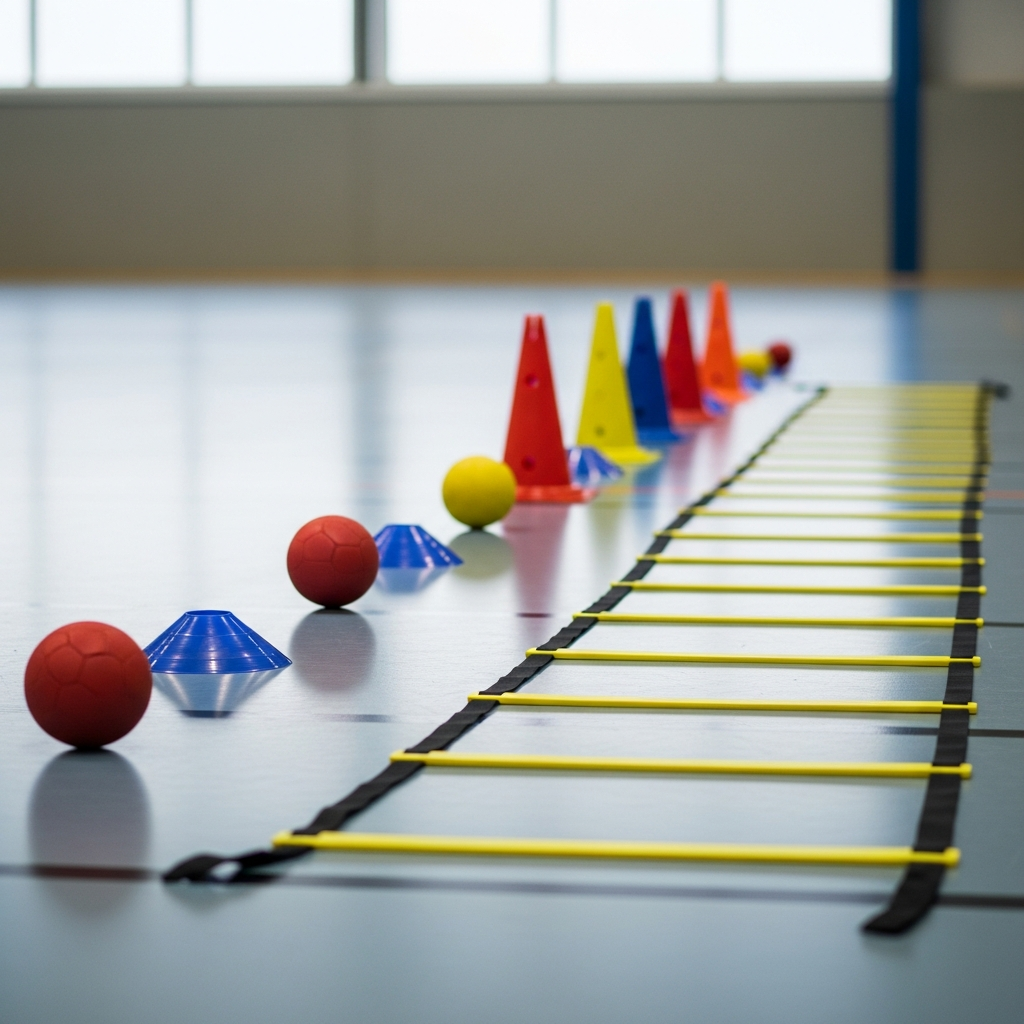
You can use images of the club environment or equipment to help your child feel more prepared:
- Ask the provider if they have photos of the sports hall, pitch or studio when empty
- Show your child the type of equipment they’ll use (balls, cones, mats, balance beams)
- If possible, drive or walk past the venue together before the first session
For some children, especially those with autism or high anxiety, knowing what the space looks like can significantly reduce worry.
17. Monitoring Progress: How to Tell if the Club Is Helping
17.1 Signs it’s working
Over several weeks, you might notice:
- Your child is less resistant to going
- They talk about specific activities they enjoyed
- They show you new skills at home
- They seem slightly more confident in other settings (e.g. playground)
Progress may be slow and subtle, especially for very shy children.
17.2 When to review with the provider
Arrange a quick chat if:
- Your child remains very withdrawn after several weeks
- There have been incidents of teasing or unkindness
- Your child reports feeling unsafe or confused by rules
Ask:
- “What have you noticed about how my child is settling in?”
- “Are there particular activities they seem to enjoy or avoid?”
- “Is there anything we can do at home to support their confidence here?”
17.3 Adjusting goals over time
As your child grows in confidence, you might:
- Encourage them to try a slightly more challenging activity within the same club
- Support them to help a newer child settle in – a powerful confidence boost
- Consider whether they might, in time, want to try a low-key friendly match or informal performance, if and only if they choose to
18. Practical Parent Toolkit: Scripts and Phrases
18.1 Phrases to use with your child
- “It’s OK to feel nervous. Lots of children feel that way at first.”
- “You don’t have to be the best; you just have to give it a go.”
- “If you want to watch first, that’s fine. You can join in when you’re ready.”
- “I’m proud of you for trying something new.”
18.2 Phrases to use with coaches
- “My child is quite shy in new groups. What can we do together to help them settle?”
- “If they seem overwhelmed, it helps if someone gives them a clear, simple choice.”
- “They might need to watch for a bit before joining in – is that OK?”
18.3 Phrases to use with yourself
- “It’s not my job to remove every discomfort, but to make sure they are safe and supported.”
- “One difficult session doesn’t mean the whole activity is wrong.”
- “If this club isn’t the right fit, we can try something else.”
19. A Second Look at the Environment
This is where we include our second image placeholder.
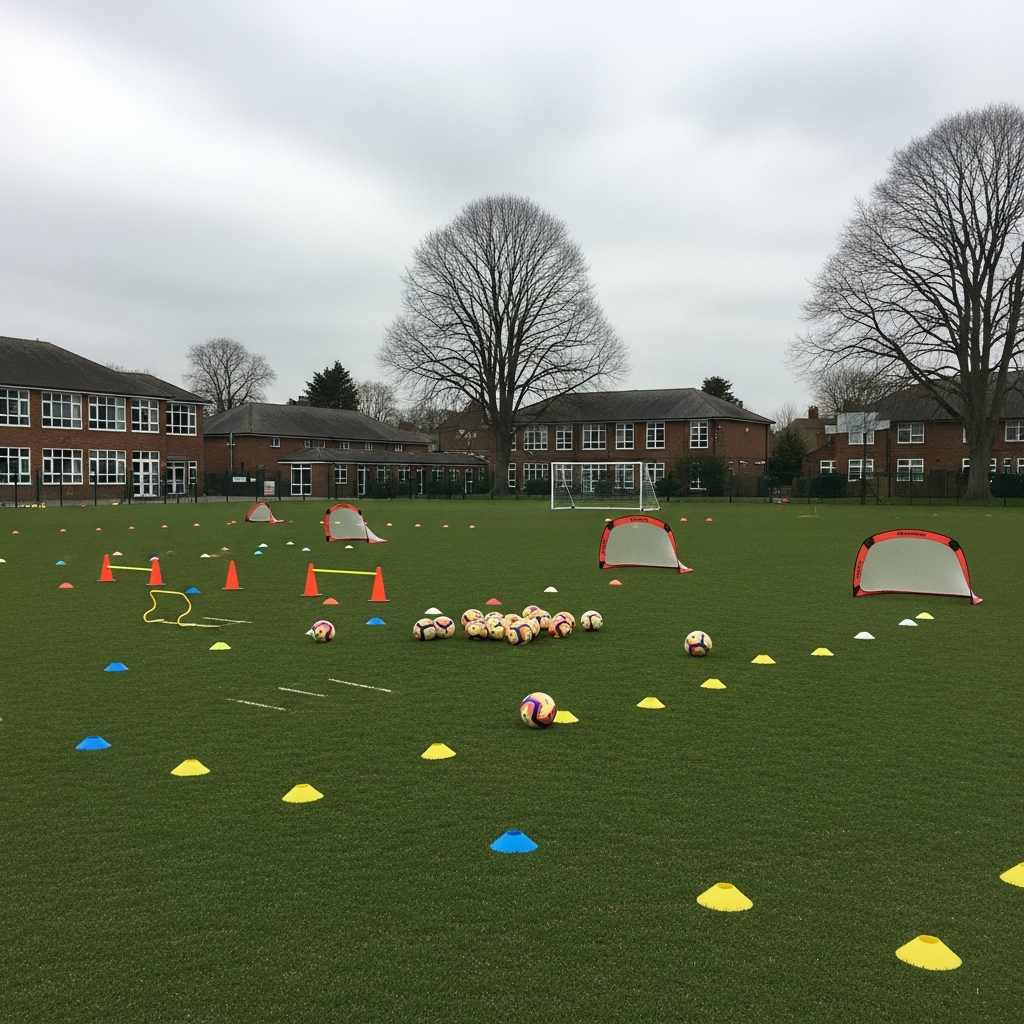
When you revisit the club after a few weeks, look again at:
- How the space is set up – is it calmer and more predictable now your child knows it?
- How your child moves in the space – do they walk in more confidently, know where to put their things?
- How staff greet your child – by name, with warmth and familiarity?
Sometimes the same environment can feel very different once it becomes familiar and your child has built relationships with staff and peers.
20. Final Summary and Next Steps
Non-competitive sports clubs can be a powerful way for shy children in the UK to:
- Build confidence in their bodies
- Practise social skills in a low-pressure setting
- Experience success without the stress of constant comparison
When choosing a club, focus on:
- Ethos – genuinely non-competitive, child-centred, kind
- Safety and safeguarding – clear policies, vetted staff, sensible ratios
- Staff quality – relevant qualifications, experience with shy and SEND children
- Inclusion – willingness to make reasonable adjustments
- Practicalities – realistic costs, clear communication, predictable routines
Use the checklists and questions in this guide to structure your visits and conversations. Trust your instincts: if something feels off, you are allowed to pause, ask more questions or walk away.
Most importantly, remember that confidence grows over time. The right non-competitive sports club will meet your child where they are, celebrate small steps and help them discover that movement can be enjoyable, safe and truly theirs – whether or not they ever set foot in a competitive arena.
If you’re unsure where to start, begin by asking your child’s school, local authority or leisure centre about multi-skills or inclusive movement clubs. From there, you can build a pathway that suits your child’s temperament, needs and emerging interests.